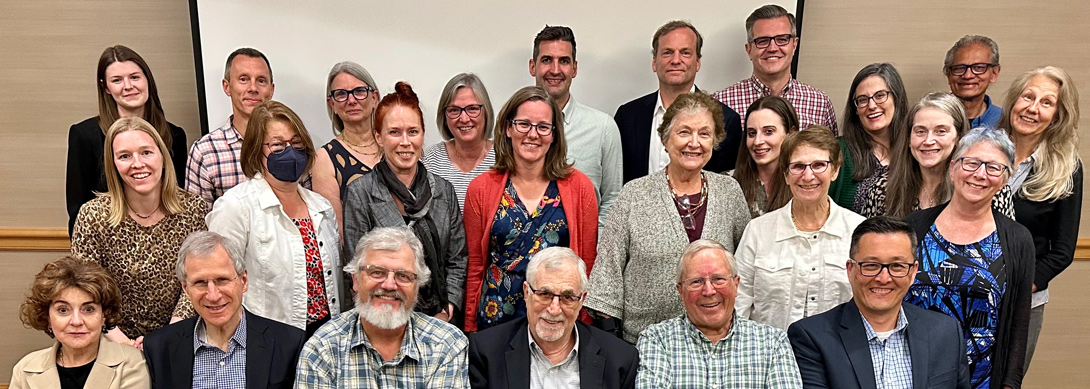
CIFASD Group Photo

The purpose of this consortium is to inform and develop effective interventions and treatment approaches for Fetal Alcohol Spectrum Disorders (FASD), through multidisciplinary research involving basic, behavioral and clinical investigators and projects. We hope to develop an infrastructure to foster collaboration and coordinate basic, clinical and translational research on FASD.

HOME

1 in 4 children receiving mental health treatment likely have an undiagnosed FASD. Yet mental health providers receive little to no training on this common condition. Christie Petrenko and Cristiano Tapparello, CIFASD investigators, developed an accessible training program and resources to help mental health providers screen, diagnose FASD, and do FASD-informed care. Read more Increasing Access to FASD-Informed Care: Bringing an Adapted Intervention to Mental Health Providers Sarah Mattson and team developed and validated an online screening tool for FASD. BRAIN-online distinguished individuals affected by prenatal alcohol exposure from typically developing children with a high degree of accuracy (accuracy=80%, sensitivity=79%, specificity=83%, positive predictive value=92%, negative predictive value=60%). The availability of an accessible, low-cost, efficient screening tool for fetal alcohol spectrum disorders (FASD) will improve diagnostic efficiency and reduce wait times and assessment costs. Read more BRAIN-online: New Screening tool for FASD! Fetal alcohol spectrum disorders are underdiagnosed because of inaccessibility of valid screening tools. BRAIN-Online provides an accessible, low-cost efficient screening tool for FASD that can improve diagnostic efficiency with a high degree of accuracy. Read more Dr. Mattson Has Developed an Accessible, Web-Based, Screening Tool for FASD Dr. DiClemente and colleagues have developed a hybrid intervention to reduce alcohol-exposed pregnancies. This intervention is delivered on a digital platform and by a prenatal care nurse. Read more CIFASD Researchers Develop an Intervention To Reduce Risk for Prenatal Alcohol Exposure Prenatal alcohol exposure can affect the developing cerebellum and regional changes are linked to working memory performance. Read more CIFASD Researcher, Dr. Jeff Wozniak, Shows a Relationship Between Changes in the Cerebellum and Cognitive Function in Children With FASD CIFASD investigator Dr. Christie Petrenko has spearheaded the development of a new app for caregivers raising children with fetal alcohol spectrum disorders. The FMF Connect app shows promise as an accessible evidence-based intervention to caregivers who can't access FASD-informed care in their communities. This report will appear in the journal Digital Health. Read more The Families Moving Forward (FMF) Connect App Shows Promise as an Accessible Intervention for Families Raising Children with FASD Dr. Claire Coles, CIFASD investigator, found that child trauma is underrecognized and educational services are underutilized in individuals with fetal alcohol spectrum disorders, compared to others from similar underserved populations. Read more Parents of Children with FASD Could Use More Support in Meeting Their Children's Educational Needs University of New Mexico researchers have found that even low to moderate alcohol use by pregnant patients may contribute to subtle changes in their babies' prenatal development, including lower birth length and a shorter duration of gestation. Read more Even Moderate Alcohol Usage during Pregnancy Linked to Birth Abnormalities Contrary to some claims, laws that criminalize or otherwise punish drug use during pregnancy are more likely to worsen rather than improve health outcomes, according to a paper by researchers at Columbia University. Read more Pregnancy Drug Use Laws May Deteriorate Health Outcomes CIFASD investigator, Dr. Jeff Wozniak, uses brain growth chart to improve identification of individuals with FASD. Read more Brain Growth Chart Identifies More Children Affected by Prenatal Alcohol Exposure Pregnancy and infancy characteristics were used to best predict which children would later be diagnosed with a fetal alcohol spectrum disorder (FASD). Read more CIFASD Investigators Work to Understand How Early Life Factors Help Predict FASD FASD can affect individuals across the lifespan, but we currently have a limited understanding of how needs change with age. Read more CIFASD Researchers Improve Our Understanding of the Lifelong Consequences of Prenatal Alcohol Exposure to Improve Clinical Care The relationship between health and immune function differs between adults with FASD and those without FASD. Read more New Data Indicate a Link between Inflammatory Markers and Mood in Adults with FASD BRAIN-online is an online testing tool that measures cognitive ability and behavior in children and adults. Read more BRAIN-online FASD Screening Tool Biomarkers could provide a more accurate diagnosis of FASD. See Smithsonian Magazine for story. Read more New Tools for identifying Fetal Alcohol Exposure CIFASD researcher, Christie Petrenko and her team of psychologists at the University of Rochester make the case for an approach to FASD based on patients' strengths rather than deficits. Read more Thriving While Living with Fetal Alcohol Spectrum Disorders (FASD) This advancement will help clinicians more accurately and reliably diagnose FASD. Read more Dr. Mike Suttie, CIFASD Investigator, Uses Machine Learning to Improve Facial Imaging Drs. Coles, Kable and Chambers report that preschool aged children exposed to heavy prenatal alcohol exposure had impairments in nonverbal ability and executive functioning that are typically seen in older children. These results suggest that the effects of prenatal alcohol can be identified in preschool children; when children are identified early in life, they can receive needed interventions. Read more Executive Functioning Problems Identified in Preschoolers with Prenatal Alcohol Exposure If you want to know about tools to help you on your parenting journey you are going to want to listen to the podcast at: https://www.fasdsuccess.com/blog/podcast-episode-072 Read more CIFASD Investigator, Gives Podcast on Changing the Story about FASD
on Jeff Noble’s FASD Success Show
The CIFASD dysmorphology core, headed by Ken Jones and Miguel del Campo, shows that primary physical measurements and subject features used to diagnose an FASD can be reliably evaluated remotely using telemedicine. This will help expand our ability to diagnose FASD worldwide. Read more Telemedicine Works to Assess the Physical Features of FASD CIFASD investigators identify potential blood markers for fetal alcohol spectrum disorders. Drs. Rakesh Miranda and Christina Chambers find that a blood test that may help predict how severely a baby will be affected by alcohol exposure during pregnancy. Read more CIFASD Investigators Identify Potential Blood Markers Listen to Fetal Alcohol Spectrum Disorder with Dr. Jeffrey Wozniak on NavNeuro.com.

Listen to podcast CIFASD investigator, Dr. Jeff Wozniak, Discusses FASD in Navigating Neuropsychology Podcast

PBS NewsHour Focuses on FASD:
Fetal alcohol spectrum disorders are more common than you think.

Read more CIFASD Investigator Dr. Jeff Wozniak Meets with the PBS Team

The CDC released new guidelines urging women of childbearing age to avoid drinking alcohol unless they are using contraception. This new guideline is designed to prevent fetal alcohol spectrum disorders (FASD). FASD is a 100 percent preventable condition.
Read more Is It OK To Drink Alcohol While Pregnant? 10 Things You Should Know
In an effort to once and for all put a rest to any debate about drinking during pregnancy, the American Academy of Pediatrics has put out a clear message: Don't do it. Ever. At all. Not even a tiny bit. "No amount of alcohol should be considered safe to drink during any trimester of pregnancy," the group wrote.
Read more No Alcohol during Pregnancy – Ever – Plead U.S. Pediatricians
News
Contact Us

We're not around right now. But you can send us an email and we'll get back to you, asap.